Friday, March 17, 2006

Troubled? Need A Heart Specialist?


People all over the world are seeking peace and comfort at this very moment. They long for peace in their lives and in their hearts. For whatever reason, people everywhere are troubled. Jesus said:


“Let not your heart be troubled….”
John 14:1

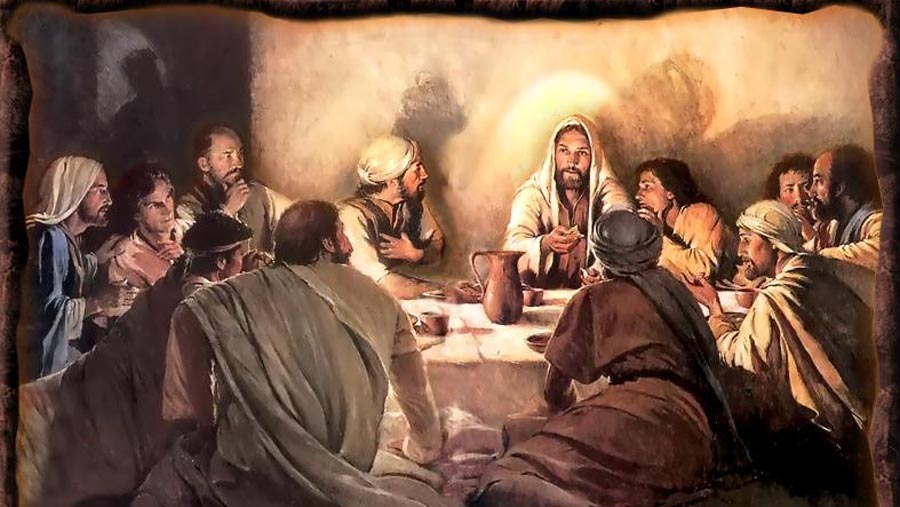
In context here, we’re still in the Upper Room with Jesus and His disciples. The entire passage from John 13:32 through chapter 16 is one long heart-melting farewell address that keeps getting interrupted by questions from the disciples. Troubled disciples. And in the hour of His own deepest sorrow, it was the troubled hearts of the disciples which now occupied Jesus. And it should be remembered that Jesus was speaking not only to the disciples in the Upper Room, but to us as well. His words are just as poignant and relevant to troubled believers today.

Think for a moment about the circumstances leading up to this tender farewell: Just days earlier, the disciples had watched Jesus ride into Jerusalem amid joyous acclamation. He was hailed as a king! The anticipation and enthusiasm of the disciples had never been higher. They were fully convinced that Jesus was their unconquerable Messiah. And now… well, Jesus’ actions and words during this Passover supper were deeply perplexing and distressing. They were troubled at hearing that one of them would betray Jesus (John 13:21). They were troubled at seeing their Master "troubled in spirit" (John 13:21); troubled because He would remain with them only a "little while" (John 13:33); troubled over the warning He had given to Peter, that he would deny His Lord three times. Clearly these men were disquieted and cast down…. The greatest blow was the slow realization that Jesus really was leaving them. It is no big surprise that the disciples were troubled!

People everywhere are troubled and want peace and comfort. But they’re looking for it in all the wrong places! The world can’t give it. Money can’t buy it. Circumstances can’t provide it. Antidepressants can’t improve it. Pleasure can’t proffer it. Status can’t impart it. Relationships can’t supply it. Only Jesus Christ can give us peace and comfort and untroubled hearts because He was the One sent to “heal the brokenhearted.” (Luke 4:18) He enters into our feelings just as He did two thousand years ago for the disciples. There is room in His heart for our sorrows too. He feels our trouble and grief as if it were His own.

“Peace I leave with you; My peace I give to you; not as the world gives, do I give to you. Let not your heart be troubled, nor let it be fearful.”
- John 14:27


- Pastor Mark

Friday, March 10, 2006

No Dessert for You. . . Your Feet Stink

Jesus “got up from the meal, took off his outer clothing, and wrapped a towel around his waist. After that, he poured water into a basin and began to wash his disciples’ feet, drying them with the towel that was wrapped around him.” (John 13:4-5)

Put yourself in the Upper Room and visualize the scene of this verse: Jesus abruptly rises from dinner and just starts washing the disciples' feet! Imagine the dramatic silence: Only the sound of embarrassed breathing and the trickle of water. Foot-washing in first century Palestine was not a ceremonial thing. It was regarded as one of the most demeaning tasks anyone could perform – usually reserved for household slaves. The disciples’ feet were stinky and dirty from walking through dusty, muddy and manure-filled streets in their sandals. And since there were no household servants at this secret meeting, who was going to wash all these smelly feet? Luke’s Gospel says that the disciples were in the midst of their favorite argument --"which one of them was regarded to be the greatest" (Luke 22:24). What a set-up! Whoever washed feet in this setting would be admitting he was the low-life of the bunch!

Peter saw at once the inappropriateness of Jesus stooping down and washing his feet; and he declares, "You shall never wash my feet." At this point a new truth emerges. Up to this moment it appears that Jesus is trying to teach His disciples the spirit of love and servanthood. Jesus replies to Peter: “Unless I wash you, you have no part with me.” Jesus doesn’t mean, "Your feet stink so bad that we’re not having dessert until they're clean." He means "Unless you are willing to let me wash away your moral filth, you may not have fellowship with me." Peter catches the point of spiritual cleansing in a flash and he cries out, "Lord, not my feet only but also my hands and my head!"

Once Jesus is finished, and the towel is brown with dirt and manure, He asks the disciples if they understand what has just happened. And the question we need to be asking is: Do we understand what Jesus has done for us in light of his whole ministry and his death and Resurrection? Do we really understand the symbolic, spiritual significance of the whole foot-washing drama? It is one of the central principles of Christianity--allowing Jesus to bathe and cleanse us from our sins and our stink.


-Pastor Mark


Monday, March 06, 2006

You're Invited to Eavesdrop...


Think about the last time you badly wanted to listen in on a conversation. You may have been seated at one end of a table and craned your neck to hear the conversation at the other end. Or maybe you’ve longed to be "a fly on the wall" to absorb a conversation in which you simply had no part. I’m not sure where your thoughts are right now, but consider this: What better conversation to eavesdrop on, but the conversation between our Savior and his disciples in the Upper Room?

Imagine being part of a Small Group/Care Ring led by Jesus himself! John’s Gospel stands alone as the only record of Christ’s words in the Upper Room. And John invites us to pull up a chair and listen in. Within hours of this gathering, Jesus was hanging upon a cross. In less than twenty-four hours he was dead and buried. These are indeed the last words of Jesus before his death on the cross.

Some scholars have called the conversation in the Upper Room the "holy of holies" of Scripture. That is, if you think of Scripture as a temple, this is the sanctuary, where you come into the very presence of God himself. Through his words to his disciples, we are permitted here to enter into the thinking, the emotions, the very heart of Jesus just hours before his own death. Jesus lays bare his heart before his disciples and He seeks to impart to them the secret of his life. The disciples will soon understand that this secret explains all of the marvelous words that Jesus spoke and each one of the miraculous works He performed. And this amazing truth is ours too.

Jesus distills for his disciples – and for us - the most important truths and spiritual principles of the Christian life. He talks about the Holy Spirit - another Comforter -- a Strengthener who is on the way. Jesus tells the disciples that he will no longer be merely with them but within them. This is powerful! It is this indwelling presence that enables – in fact makes possible -- living in our predominantly troubled world. Our Jesus does not so much discuss the world as he does how to deal with the world. So the message of the Upper Room is a vital message for each of us.

As we move toward the Easter Season here at Crane Chapel, we’re going to spend some time considering this small-group meting between Jesus and his disciples in John Chapters 13 – 17. Please come these next weeks with great expectations and an eager heart as we look into this deep and insightful passage. The Upper Room really is the quintessential Small-Group/Care Ring study. By listening in, we can each uncover the secrets of living a fulfilled life with Christ!


Pastor Mark and
Esthermay Bentley-Goossen

Thursday, March 02, 2006

Post Script on Suffering


It may be cancer or a sore throat. It may be the illness or death of someone close to you. It may be a personal failure or disappointment in your job or schoolwork. It may be a rumor that is circulating in your office or your church, damaging your reputation, bringing you grief and anxiety. It can be anything from a mosquito bite to facing a lion as Daniel did. It is suffering.

The Book of Job approaches suffering largely from one angle. Job’s suffering ultimately brought him to a high degree of spiritual refinement. His suffering was not so much punishment as it was disciplinary. But why do we suffer? Christians are subject to common calamities just like the rest of the world. If God protected His children from all storms, disappointments, poverty and destruction, they would be tempted to serve Him for selfish reasons, just as Satan falsely accused Job of doing. Good people have no insurance against physical death; even innocent children and babies die. In my studies, I’ve
uncovered the following from Scripture as reasons for our suffering:

  • Refines the Christian (Job 23:10)
  • Brings the fruit of righteousness
  • Discipline from God (Hebrews 12)
  • Caused by the reaping of sin (Gal. 6:5-6)
  • Cause by the sin of others (alcohol, temper, thieves, gossip, etc.)
  • Result of a bold witness for Christ (Phil. 1:29, I Pet. 4:12-13)
  • Prevent a wrong course of action (Ps. 119:71, 67)
  • Shows us our need of God (Ps.119:71)
  • Brings patience (James 1)
  • Prepares us for a future test (I Cor. 10:13)
  • Brings solitude/ Helps us hear God
  • Brings future rewards (James 1:12, II Tim. 2:12)
  • Caused by violation of God’s natural laws
  • Caused by violation of moral laws
  • Brought by Satan under Gods’ permissive will
  • For God’s glory (Ro. 8:28, Jn. 11:4)
  • Shows us God’s comfort, grace and power (II Cor. 1)
  • Teaches us how to comfort others (II Co. 1:4)
  • Unites Christians/ opportunities for saints to minister (Acts 12)
  • Helps us identify with Christ’s suffering and example (Phil. 3:10)
  • Teaches us obedience (Heb. 5:8)
  • Keeps us humble (II Co. 12:7-10)

Jesus explains, “The thief’s purpose is to steal and kill and destroy. My purpose is to give life in all its fullness” (John 10:10). None of us is immune to the thief (Leviathan) and none of us will escape suffering. But it is during times of suffering that we learn to refocus our lives on God. David confessed it in Psalm 119:71: “The suffering You sent was good for me, for it taught me to pay attention to Your principles.” If it still doesn’t make sense to you, just learn to rest in God’s sovereignty and trust in His Goodness and Love.
-Pastor Mark

Job's Epilogue...


The last Chapter of the Book of Job seems to hurriedly yet neatly tie up one of the most intellectually rich and challenging Books of the Bible. The verses are often ignored or quickly and easily identified as a simple fairy tale-like conclusion. What a mistake! We’d miss the whole point! This is a part of Scripture that we should not let go of until it has fully probed our thinking regarding God’s sovereignty, human suffering, and restoration.
What the closing narrative tells us is that Job is -- at long last -- through both Truth and humble trust -- fully transformed, fully vindicated, and fully restored with double his goods and wealth, blessings over and above what he had in Chapter 1, and a replacement set of children. And his life is more than doubled. Job lives another 140 years which is twice the biblical span of our days (Ps. 90:10).

Would the message of the Book be any different if God had not restored Job? No. God is still sovereign and the whole matter of suffering would still have been at the forefront of our study. It would have still been necessary to consider the questions of “Why vs. Who” and “Good vs. Evil.” The whole notion of human emotions, counseling the troubled, and comforting the hurting would still have been addressed. And we would still have had to put our personal trials in proper perspective alongside the enormity and grandeur of God’s creation.

Henry Morris, a renowned Christian scholar, has said that Biblical Creation is the answer to all human suffering. Do you suppose if you made an appointment with a psychotherapist for help with depression or anxiety, you’d hear that!? Hardly! But as we’ve learned through our study, it is only through our understanding and a profound appreciation of God’s creation and sovereignty that we can put our suffering into perspective and be emotionally and spiritually restored.

On the flip side, the brevity of the conclusion of Job’s story invites questions and even speculation. The Book of Job is unique in that it emphasizes that an inheritance is divided among daughters (as well as sons). Job 42:14 lists the names of Job’s three daughters -- but not the sons. Does Job now question “tradition” and act accordingly in paying tribute to daughters? Does he now see that the security of earthly possessions is irrelevant? What is Job’s spiritual condition as the story wraps up in the closing verses? Does he pray? Does he have joy? Does he continue to worship God? Are these questions even relevant? Yes, questions still ring in our ears. And in my mind, the only remedy for that condition is to read the Book again! And again….


- Pastor Mark

Thursday, February 16, 2006

Rocks of Adversity...


From the beginning verses of our study, Job has longed for an opportunity to plead his innocence before God. Finally God appears in Chapter 38 and gives Job that opportunity. And what does Job do? He remains silent. It had become clear to Job that it was no longer necessary for him to speak. In his first address, God challenges Job with the magnitude and grandeur of His natural creation. From the stars to the ocean to the desert, what does Job know about anything? Job is humbled and ashamed and he concedes his unworthiness. But God is not done….

God moves now beyond the creation and supervision of the elements to the animal kingdom and his care for it in order to further demonstrate how limited Job’s knowledge really is. God has filled the earth with living creatures that are absolutely dependent upon Him for life and for the sustenance of life. God’s zoology lesson was not intended to end with a quiz, but to allow Job to become fully aware that the God who cares for every creature on the earth would most certainly make adequate provision for the one He had created in His own image!

God’s zoology lesson begins and ends with lectures on animals of prey – the animals that in today’s world are considered injurious and of no value. Yet, God cares for them with unerring wisdom. (Do you consider some things in life valueless? God doesn’t.) He speaks of the mountain goat that inhabits the most inaccessible and rugged mountain areas of the earth. Job could hardly miss the point here. Was Job himself not climbing over rugged rocks of adversity? God continues. . . He speaks of the life cycle of the animals -- the moment of birth and the moment of death. Something - again - that God knows and we do not. God moves on to the ostrich – a most unusual and brainless bird as it is devoid of any maternal instincts at all! (Know anyone that fits that description?”) A mistake on God’s part? Hardly! God provides for the young eggs’ protection in the most amazing way and provides food for the young bird in the very eggshell from which it hatches. Chance? No. Proof again of the wisdom of God in caring for his creation. The examples and lessons go on and on. And on. . . . As anyone who has studied the animal kingdom knows, God’s creation is truly vast and incredible and inexplicable.

God had shown Job once again that as a limited human being, he has neither the ability to judge the God who created the universe nor the right to ask the why of anything. God’s actions do not depend on our lack of understanding. God’s challenge to us then, is first to be awed by the natural creation and our insignificance within it, and secondly to realize the magnitude of the task he has in bringing both righteousness and judgment on both his creation and those created in His own image. It is ours to question the rocks of adversity in any way at all? Are you getting the point?


- Pastor Mark

Monday, February 13, 2006

GOD Speaks...


By the time we reach Chapter 38 in the Book of Job, we’ve come to appreciate the depth of Job’s affliction, we’ve wallowed in his misery, we’ve undeniably considered our own suffering, we’ve listened to Job's smart-aleck friends offer their own pretentious and useless wisdom, and we’ve perhaps ourselves questioned God’s role in the whole mess. At this point we are left pretty much famished for spiritual food and drink. Enter: GOD. Not through another “counselor,” but by direct revelation!

God speaks for 70 verses in these next two chapters before Job has an opportunity to respond. And when he does, Job only mumbles words suggesting that God’s speech has undone him (Job 40:3-5). What is it in the words of Job 38-39 that evoke such a change from the defiant Job of 31:35 to the abashed Job of 40:3? Speaking from a whirlwind of a mighty storm, God – surprisingly – does not answer any of Job’s questions. Instead of answering Job’s charge of abandonment, God challenges Job to respond as He defends the design of His creation and the very existence of the entire universe. As we read these poetic verses, it is obvious that God’s questions could not possibly be answered by any human. The Divine questions reveal to Job that he does not know the ways of God. And if Job is ignorant of the earth’s natural order, it’s ridiculous to think that he (or any human) could comprehend the moral order of God. There is a purpose in creation that God knows but Job does not. There is a purpose in human suffering that God knows but Job does not. God's great power and wisdom is certainly a contrast to Job's limited ability and understanding. Overwhelmed, Job admits his unworthiness and inability to answer. But, God is not through with Job yet. God continues for 53 more verses! You could say Job was silenced and humiliated by his own self-centeredness and pity.

Henry M. Morris writes these words


. . . even Christians have become self-centered instead of God-centered. We emphasize personal Christianity, personal experience, self-image, inter-personal relationships, and what Jesus can do to meet our needs. All these have their place in the Christian life, but not when they relegate God and his purpose in creation to only a peripheral role ….


(The Remarkable Record of Job,©1988)


So why is the issue of suffering never directly settled by God? Why does God focus exclusively on His creation and His providential care over it? The entire Book of Job presents a story that moves beyond what it means for humans to suffer. It should lead us to inquire what it means to be an ordinary human at all when God is truly GOD. And if he is GOD, there is little else to do but to submit our suffering to Him and rest in his care.

-Pastor Mark

Friday, February 03, 2006

Weep With Those Who Weep...


Counseling is an often-used word today, but what do we really understand of it from a Biblical perspective? The Book of Job is replete with lessons on suffering, but one of the greatest that we can apply to the church body is that of how to counsel and how not to counsel those who are hurting? Counseling can do harm. Job evidently took some time to recover from his friends’ “counseling.” Recovery only came after Job forgave and prayed for his counselors. (Job 42:10)

Let’s revisit Job’s counselors: They wept. They mourned. They sat with Job in the dirt, in shocked grief, speechless, for seven long days. Great start! They might have done well to just pack up their stuff and leave at this point. But, like so many of us, they became impatient and instead of filling their divinely appointed role of comforter, they chose the world’s preferred alternative of claiming godlike knowledge. They focused their efforts on becoming superior-advice-giving-therapists, rather than comforting and counseling their friend as a peer.

When they saw him…they began to weep aloud …they sat on the ground with him for seven days and seven nights. No one said a word to him, because they saw how great his suffering was.


- Job 2:12-13


Like Job’s friends, we also tire of being in the dirt with our hurting, depressed, and often-irritable sisters and brothers. We want to dust ourselves off and show that we’re above that sort of thing. We refer our hurting friends to secular therapists and best-seller books. We rely less on God and our divinely appointed role as comforters and defer to a therapeutic culture, that looks beneath every hurt, pain and struggle in life and finds a psychological disorder that needs repair; and more often than not: a pill. What’s really going on is a soul crying out for what only Jesus Christ can provide. We need to quit relying on professionals to fix damaged “psyches.”

The problem is disconnected human souls. The church is designed to “grow and build itself up in love, as each part does its work.” (Ephesians 4:16) Just as spiritual gifts are to be used for the entire church body – so is its capacity to listen, understand, empathize, and nourish. If you’ve ever received comfort from God – no matter how small - you have something in you that could deeply impact someone else who is hurting.


…. the God of all comfort, who comforts us in all our troubles, so that we can comfort those in any trouble with the comfort we ourselves have received from God.

- II Corinthians 1:4

You can stimulate the lonely, revitalize the discouraged and introduce hope into the lives of people who feel rejected and useless. Even if you yourself feel rejected and useless. Look at Jesus for inspiration. He is – after all - the Wonderful Counselor. (Isaiah 9:6) He was the Son of the God of the Universe! Yet he was humiliated his entire life. He was despised and rejected. (Isaiah 53:3) He was physically vulnerable, weak, tempted, subject to pain, and as the final disgrace, rejected by God. (Matt. 27:46) We see him tired, thirsty, in tears, impoverished, ridiculed. Scripture stresses that the thing that equipped Jesus for his ministry was that he became like those he was called to help. Today, we’ve somehow established that only those exalted to godlike status holding PhD’s are empowered to minister and counsel. Nothing could be further from the truth. Even, the most renowned Christian counselors have said that they are only able to truly help people when they put aside their academic training and rely upon the Lord to direct them. And isn’t this what each of us is called to do?

Much heartache could be averted in the body of Christ if we could learn to “weep with those who weep.” (Romans 12:15) Not necessarily shed liquid tears, but unashamedly embrace the pain of others, and let it be obvious that “if one part of the body suffers, every part suffers with it.” (I Cor.12:26) It’s a huge shift in thinking, but the greatest need for the hurting and depressed in our community is not to have more counseling centers or psychotherapists, but a church body where Christ is exalted and ordinary people learn to shepherd the hurting because, Biblically speaking, simply being a friend, confidant, and sympathizer, is a lofty role that not even angels or God himself can fully fill. Only we, for instance, can give a hug or share coffee with a friend. People in pain need to know that they are not alone - they need people with whom they can relate. They don’t need advice as much as they need company and comfort. We don’t see Jesus asking his disciples for advice, but we often see Him asking for their company. Advice is cheap. Comfort is precious.
-Pastor Mark and Esthermay Bentley-Goossen

Thursday, February 02, 2006

Elihu To The Rescue


Anger and youth are not qualities valued in the wisdom traditions of the Old Testament. But in Job Chapter 32, we’re introduced to Elihu as an angry youth, frustrated with Job and his three friends and Elihu might just have the answers for which Job is desperately searching. Was God at last using someone to speak truth to Job? Elihu is presented as a “Buzite” and this lineage is important to his character. The Hebrew noun “buz” means contemptuous or contemptible and occurs several times in the Book of Job (Job 12:5, 21 and 31:34) with the same meaning. Is the author trying to tell us that Elihu is a little bit out of control? We have to wonder what kind of “counselor” this new kid is going to be.

Eliphaz, Bildad and Zophar were lousy counselors who repeatedly brought accusations against Job trying to convince the poor guy that he was suffering because of his past sins. They were of no consolation at all! Now here’s Elihu: He does speak very clear, plain words, but his attitude is a bit obnoxious. He assuredly maintains that Job’s suffering will leave when Job realizes his present sin. He maintains that Job wasn’t suffering because of sin, but was sinning because of suffering. While Elihu’s speech was on a much higher plateau that the others, he still wrongly assumed that a correct response to suffering always brings healing and restoration and that suffering is always in some way connected to sin. The new kid did bring Job to an awareness that he ought not exalt himself so piously, but imagine how you’d feel – having gone through all that Job had -- being put in your place by a smug, overbearing teenager!

So what can we learn from Elihu? Correctly, Elihu exhorts that suffering is not meant to punish us as much as it is meant to correct and restore. And the bulk of Elihu’s counsel focuses on the justice of God, which Job has repeatedly criticized. He concludes his session with an effort to speak on God’s behalf …. He admonishes Job to sit still and consider the wondrous work of God. Elihu seems to be preparing Job for what is about to follow.

To be continued. . .
- Pastor Mark

Saturday, January 28, 2006

I Know My Redeemer Lives


The Book of Job touches so many issues. If you’ve ever suffered hardship or heartache, you perhaps feel an affinity with Job. There’s no doubt seeing the crafty maneuvers of Satan serves as a great help to know how to better handle temptation. And who hasn't been challenged to become a more intelligent counselor when comforting a hurting friend because of the colossal mistakes of Job's friends? But we need to ask, "What is the chief purpose of Job?" Many believe it is to prepare the way for the work of Jesus on the cross.

Following the long, drawn-out squabble with Eliphaz, Bildad and Zophar, Job longs for a daysman (KJV). He desperately needs an umpire - a mediator - to settle the score. It’s right about here that Job declares:

"I know that my Redeemer lives"
- Job 19:25

Job is speaking of his Goel. So, our first question is, “What is a Goel?” It’s an ancient concept where members of the extended family were bound to the rest. Each bore a particular responsibility for the others. The Old Testament Law explains that if a man became indebted, the Goel was responsible to pay his debts and thus free the man. (Leviticus 25:25) If a man died childless, the Goel was responsible to marry his widow and produce a child to carry on the family name. (Deuteronomy 25:5) If a man were murdered, the Goel was responsible to avenge his death. (Numbers 35:12) The law further provided an order of priority to determine who of the family members was responsible to fill the role of the Goel. There were, after all, very particular requirements of the Goel. Besides being a near relative, he must be willing and able to fulfill the role. So you can get a sense of how important this whole thing was. The Kinsman-Redeemer had the responsibility of redeeming his relative’s lost opportunities. And in Job Chapter 19, Job's faith launches out and declares that God will definitely provide his Goel!

Jesus answered Job's cry. Jesus ideally fulfills Job’s need for an umpire. Emmanuel is the one true mediator between man and God. Between Job and his affliction. Between righteousness and sin:

"For there is one God, and one mediator between God and men, the man Christ Jesus, who gave Himself as a ransom for all….” (1 Timothy 2:5-6)

As for the requirements of the Kinsman-Redeemer, Jesus fully fulfills that role as well. He is like us – a near relative:

“Since the children have flesh and blood, he too shared in their humanity so that by his death he might destroy… the power of death…” (Hebrews 2:14)

He is willing:

“For even the Son of Man did not come to be served, but to serve, and to
give his life as a ransom for man.” (Mark 10:49)

Finally, He is able:

“…has blessed us in the heavenly realms with every spiritual
blessing in Christ.” (Ephesians 1:3)

We have a Kinsman-Redeemer. Someone who will redeem all our lost opportunities. Someone who will take up our cause. Someone who will meet our needs. It’s Jesus. He has bound Himself to us by covenant oath, an oath that was established at the Cross. We may not have the afflictions of Job, but we each live with our own predicaments and it is at the Cross that we can find hope. Whatever your situation, you too can declare, “I know that my Redeemer lives!”

- Pastor Mark

Friday, January 20, 2006

How Do You Comfort The Grieving?


Imagine the unimaginable. You’re home fixing dinner. The television news is on and there’s the breaking story – cameras on the scene: A child is absolutely still. Deathly still. In a pool of blood. Under a pale blanket. It’s just another horrifying, heartbreaking news item. But then your phone rings. Suddenly it doesn't matter what was for dinner. The dead child is your neighbor.

You’re suddenly reeling, as if in a dream. The world around you screams to a halt. The grief of someone very near becomes as close as your own. Your first thought is, “Oh, how my heart goes out to _______.” Your next thought is, “What can I do to help? How can I comfort this family?” You realize that many of the seemingly sincere gestures offered over the next days may be of no “comfort” at all. Some “comforters” may be good candidates for a Job’s counselor – and none of us wants that title. What do you do?

“…the God of all comfort, who comforts us in all our troubles,
so that we can comfort those in any trouble with the
comfort we ourselves have received from God.”
- II Corinthians 1:4

God’s Word tells us to comfort others with the same comfort we’ve received ourselves! When we survive a traumatic situation with God’s help, we become uniquely qualified to help others who have the same problem. In a sense, God gives us a special ministry. But simply being comforted by God in any circumstance gives us a message of hope for others with problems, regardless of the nature of their trials. That’s the way God’s comfort is supposed to work. It flows from heart to heart!

The entire book of II Corinthians is a letter of comfort. The word is used twenty-nine times in the letter. But comfort here is not just sympathy, it refers to “calling another alongside to help.” The word combines the ideas of exhortation and consolation. There is comfort and grace available for every problem we face and each of us has – and always will have -- problems and dilemmas and shockingly horrifying things happen to us and to our neighbors because “Man born of woman is of few days and full of trouble.” (Job 14:1)

So what kind of comforting blanket do you throw around your neighbor to put out the smoldering anger and burning pain and grief?

“Rejoice with those who rejoice, weep with those who weep.”

- Romans 12:15

“Therefore encourage one another and build each other up….”

- 1 Thessalonians 5:11


“Carry each others’ burdens, and in this way you
will fulfill the law of Christ.”

- Galatians 6:2

“And we urge you, brothers… encourage the timid,
help the weak, be patient with everyone.”


- 1 Thessalonians 5:14

When one person comforts another, something is poured out of one and into the other that has the power to encourage, restore and heal the deepest hurts. It’s God’s design! Ordinary people intersecting to share and reveal HIS Comfort!

- Pastor Mark

Thursday, January 12, 2006

Problems or Pearls


The little pearl oyster receiving accidentally into its shell a rough fragment of rock or sand tries in vain to expel the intruding and irritant substance and only suffers in the struggle until rasped and bleeding it gives up in agony and helplessness. Then a new force comes into play. From its peculiar physiological system the little mollusk sends forth a crystal fluid which covers and coats the rough piece of rock with a soft crystalline cushion and as this grows and hardens it becomes a beautiful pearl. It ceases to irritate and soothes and rests the wounded side of the little creature until the curse has become a blessing, and some days later the pearl fisher discovers the hidden treasure, opens the shell and takes forth a gem of purest luster and boundless value which is worn in the coronets of kings and adorns the highest rank and grandest occasions. So someday our sorrows, irritations and wrongs, having first been sweetened by the Holy Spirit into heavenly virtues, will become the jewels of an immortal crown and will shine in the diadem of Jesus and adorn our brow forever!

(A. B. Simpson, Volume V in the Christ in the Bible series - Christian Publications, Inc.)


A.B. Simpson’s words are tender and poignant. The pearl oyster embodies so many human problems, sorrows, and emotional suffering. Like the oyster, we encounter “irritants,” but we have a tendency to try and avoid them. We’re human – it’s inborn. Christian counselors will tell you that the basis of almost all mental illness is the tendency to avoid problems and the emotional suffering inherent in them. It was renowned physician Carl Jung who said, “Neurosis is always a substitute for legitimate suffering. “

The tragedy of course is that the substitute for our suffering ultimately becomes more painful that the original suffering we are trying to avoid! Does this explain why the wisest saints among us are often the people who endure pain rather than escape it? These saints are men and woman who are “acquainted with grief.” I believe this describes Job. How about our Savior Jesus Christ? “He is despised and rejected of men; a man of sorrows, and acquainted with grief.“ (Isaiah 53:3) “…yet learned he obedience by the things which he suffered.” (Hebrews 5:8)

Are you trying to avoid problems and the suffering that comes with them? Maybe you have several dozen problems today. If you listen to the voices around you, you’ll search for a substitute – an escape route. You’ll miss the fact that your problems are God-appointed – fashioned to stretch you and challenge you and deepen your walk with Him. Growth and wisdom come with each irritating-piece-of-sand-kind-of-a-problem. And what emerges is an exquisite gem of purest luster and boundless value!


- Pastor Mark

Friday, January 06, 2006

The Gift or The Giver


The quandary of undeserved suffering… It’s a puzzling mystery and an age-old question. Why does God allow the righteous to suffer? It’s the question that the Book of Job addresses:

In just a matter of hours an especially righteous and notably wealthy man loses all of his material possessions, each of his children, and his good health. Next, to add misery to despair, Job’s friends condemn him rather than console him and then his wife gives up and turns on him. Worst of all, the God he loves and serves refuses to answer his cries and rise to his defense and do something. The question of suffering has been addressed in countless ways through the centuries since the time of Job. Why do we suffer? Who or what causes it? Why does God not do something? Not all of our questions are answered and it’s worthy to note that Job himself did not receive a direct answer to his own suffering.

In Job’s story, the accuser suggests that Job serves God only because of the things he receives from God in return for his service – that if Job suddenly lost all his rewards, his reverence and respect for God would surely wane. Satan proposes that Job does not serve God out of love or devotion at all!

Satan’s suggestion clobbers the human race right at the heart of our basic, inner, egocentric existence: Selfishness. Do we only worship God for self-seeking reasons? Would we serve the Lord if we enjoyed no personal gain from it at all? The accusation was an attack on God as well for it suggests that the only way that the Creator can get people to worship Him is to promise them health and wealth and worldly treasures.

Surely God knew Job’s heart and understood his devotion. Indeed God allowed Satan to buffet and beat Job, so as to silence the accuser. And to be sure, God was in command of Job’s mystifying journey – a journey that would forever change his spiritual insight.

How about you? Are you in it for the blessings? Or are you worshiping the Blesser? The gifts are nice, but do you love the Giver? Have you reached the point where you can recite the words of A. B. Simpson as your own? . . .

Once it was the blessing,
Now it is the Lord.
Once it was the feeling,
Not it is His Word.
Once His gift I wanted,
Now the Giver own.
Once I sought for healing,
Now Him alone.

Once it was my working,
His it hence shall be.
Once I tried to use Him,
Now He uses me.
Once the power I wanted,
Now the Mighty One.
Once for self I labored,
Now for Him alone.

All in all forever,
Jesus will I sing.
Everything in Jesus
And Jesus everything.

- A.B. Simpson


- Pastor Mark

Friday, December 30, 2005

The Eyes of God. . .


It is a land the Lord your God cares for; the eyes of the Lord our God are continually on it from the beginning of the year to its end.
- Deuteronomy 11:12

What land? And what year? It was around the year 1400 B.C. It was the Land of Milk and Honey: The Promised Land. And in the context of this passage in Deuteronomy, the Israelites are being equipped to set out and possess the land. They did not yet physically control the land – their right to the territory hadn’t yet materialized. Yet they already seemed to have power over this land through eyes of faith.

And guess what? This same beautiful illustration is ours: God’s caring and attentive eyes are always looking upon us. And we - like the Israelites - can put our concerns and uneasiness into God’s hand of infinite grace and possess strength to face the yet-unseen future. 2006 is our Land. It could be a year of spiritual drought. It could be a year of graceful abundance. Either way, as believers, we can settle in “green pasture and lie down beside the still water.”

“The eyes of the Lord…” What precisely does that mean? Surely it is more than just Omniscience. I don't know for certain. But let’s just envision the delight and enchantment in the eyes of a loving and devoted parent as they watch their young child achieve something for the very first time. Now, see in your mind's eye: the deep love of God’s eyes as He watches His creation. He watches each of us with personal interest. This looking-after is not delegated to some other heavenly creature. God Himself watches us! The heart of Deity looks after us! And he never stops watching after us. This special watch-care is unbroken. It’s continuous. This unwearied power of God toward His people has been uninterrupted since the creation of the world! No human effort, no lyricist, no gifted writer, no dramatist could ever sufficiently make plain or explain God’s watch-care over His own.

It’s time we switched to the flip side. We need to take an honest look at our eyes. If God is ceaselessly and unwarily watching us, should not our eyes be upon Him? Constantly?! Sad thing is I’m afraid we don’t even come close. We get caught up in our days -- setting our sights on the temporal and the frivolous – and we don’t look for Him or see Him at all.

While the rest of the world is settling in for the few weeks of agony that goes along with keeping “New Year’s Resolutions,” let us resolve to cultivate the practice of looking to and seeing God in all of 2006.

- Pastor Mark

Wednesday, December 28, 2005

God's Agenda . . . Facing the Winter Seasons of Life

Tucked away in a quiet corner of Scripture is a verse that brims with meaning and emotion. Read with reflection these ancient words from the pen of Job:

“From the city men groan,
And the souls of the wounded cry out”
- Job 24:12

Slip into the scene of this verse for just a moment: Beneath the loud splash of bustle and activity in our cities, there are invisible, wounded, broken hearts - souls aching from shattered relationships, illness, death, financial despair, crushed hopes, unforeseen disaster, the list goes on and on.... Job calls them groans. In Hebrew, the word suggests that this groan comes from one who has been wounded. Perhaps this is why Job adds the next poetic line: The souls of the wounded cry out. In this line, “wounded” comes from a term meaning pierced as if stabbed. But it is the soul that is crying out, for the deep hidden lacerations of the heart can be far more painful than a physical stabbing. Does this describe you today? To be sure it defines Crane Community Chapel as a church body.

In a very real sense, 2005 has been a winter season for Crane Chapel. Winter speaks of barrenness: Icy shadows. Naked branches. Short days. Long nights. It is an ideal time to slow down in quiet reverence and remember that

God is in the heavens;
He does whatever He pleases.”
- Psalm 115:3

If we’ve learned anything in 2005, it is that our lives here on earth are indeed God’s agenda. Not our own. There were no designs in January of 2005 for Crane Chapel to flatten an arson-destroyed church building. There were no plans that included blueprints for a 1.3 Million dollar building project. And there were no guidelines for a pastoral search committee. But God is still working. His blessings and His agenda become more evident with every step we take. When the despair of this winter season has past, we will be wiser, stronger, and deeper in love with Jesus.

Crane Chapel stands at a crossroads this New Year. We can look backward or forward. The backward glimpse is devastating. It hurts. Unexpected circumstances occupied and dominated a great part of 2005. The good news is that God’s Word holds answers. The book of Job brings light and understanding to the perplexities and heartaches of life. Together, as a congregation, we are going to begin this New Year with a sermon series in this great book of the Bible. Together, we will discover Scriptural principles to direct and sustain us in the winter seasons of life.

Is it winter right now in this season of your life? Are you weighed down with feelings of confusion, depression, and loneliness? Do you feel forsaken, spiritually on hold, barren, cold? No question – our lives here on earth will always include winter. But, beyond the thick gray clouds of winter…is God! His agenda is miraculously greater than ours. And some days His Light just makes everything beautiful and shiny! Let this study in Job be a blessing and a source of comfort, as we look Forward in 2006!

- Pastor Mark & Esthermay Bentley Goossen

Tuesday, December 27, 2005

The WHY? of Christmas. . .


Christmas greetings! My prayer this Christmas Day is that the Crane Chapel Family feels all the love and joy and peace that only Christ Jesus can give. I do hope that you have experienced His wondrous Salvation and have had many opportunities to share it.

It is a cliché, but in the hustle and bustle of the world, it is so easy to miss the real meaning of Christmas. There is so much unnecessary décor and clutter and mayhem and even chaos that the real meaning can be completely overlooked. It has been said, that if Jesus were invited to the birthday party that the world throws for Him each December, He wouldn’t even RSVP. Sadly, the world has not invited Him. The world does not want Jesus. It sees no need for Jesus. People just don’t want Jesus making any claims on their “private lives.” They don’t want to acknowledge the reality of who He is. They only want to throw a big celebration so there’s a ready excuse for all the stuff they choose to do. The world’s indulgence and entertainment are at Jesus’ expense and in His name! How’s that for honoring His birth?

It’s always fitting when Christmas Day falls on a Sunday, don’t you think? In the grand text we look upon today, we are faced with the reality of Jesus Christ and obliged to reflect on the WHY of His advent. Why did He come?

Our SUBSTITUTE:
“But we see Jesus, who was made a little lower than the angels for the suffering of death, crowned with glory and honor; that He by the grace of God should taste death for every man. Christ took the penalty that we justly deserve.” - Hebrews 2:9

Our SALVATION’S CAPTAIN:
He came to earth to lead us up to the Father: “For it became Him, for whom are all things…in bringing many sons unto glory; to make the captain of their salvation perfect through suffering.” - Hebrews 2:10

Our SANCTIFIER:
Jesus Christ is capable of making us holy and part of His family: “For both he that sanctifieth and they who are sanctified are all of one, for which cause he is not ashamed to call them brethren.” – Hebrews 2:11

Satan’s CONQUEROR:
Jesus came to earth, he died, and rose again - destroying Satan’s power of death: “…he himself likewise took part of the same, that through death he might destroy him that had the power of death, that is the devil.” -Hebrews 2:14

Our SYMPATHETIC HIGH PRIEST:
“…that He might be a merciful and faithful high priest… to make reconciliation for the sins of the people. For in that he himself hath suffered, being tempted, he is able to help those that are tempted - Hebrews 2:17-18

The WHY of His Advent? The one single individual and only reason for Christ’s Birth was so he could DIE. For those who have received Him, there is nothing more marvelous or incredible to Celebrate! Go ahead and break out the mayhem and décor for that!!

- Pastor Mark

Friday, December 16, 2005

The Lamb of God


"The Lamb of God.” What a wonderful title for a children’s Christmas Program. A lamb is such an endearing animal and children adore gentle, sweet animals. Children – even more than most adults - appreciate the wonder of the animals that filled the stable where Jesus was born. Even so, Lamb is a rather unusual title for God’s Son. Of all the animals in creation, why was this species selected over, say, an eagle… or a lion? Let’s take a quick spiritual journey and appreciate why Lamb of God is such a fitting and proper title for our Savior Jesus.

Mankind’s need for a Savior travels much further into history than the stable in Bethlehem some 2000 years ago. God realized the condition of mankind even before He created the universe. His Son is the “lamb slain before the foundation of the world.” (Revelation 13:8) When Adam and Eve put their own desires above God’s will, God initiated the world’s first sacrifice. From that sacrifice, the skins of an animal were used as garments to cover Adam and Eve’s nakedness. For all of time since, sin has needed to be covered. This “covering” of sin would ultimately come at a great price. God’s own precious and innocent Son would die like a spotless lamb to cover the sins of His own creation.

Cain and Abel were taught that the only way to approach God was through animal sacrifice. Of course, we know the story. One of the brothers obeyed and observed God’s command and offered a true sacrifice understanding that God does not allow substitutions. Years later, God’s Lamb would become the ultimate and final sacrifice.

God tested Abraham by commanding him to sacrifice his beloved son Isaac. Abraham complied and because of his obedience, God provided a ram as a substitute for Isaac’s life. I am so glad that God’ Lamb is our substitution.

The Israelites applied the blood of the Passover lamb to the doors of their homes. This too was God’s command. It was their only hope of being delivered from the destruction and havoc sent upon the Egyptians. “… He is to cast lots for two goats – one lot for the Lord and the other for the scapegoat… He shall bring the goat whose lot falls to the Lord and sacrifice it for a sin offering.” (Leviticus 16:8-9) Again, years later, God’s Lamb became a sin sacrifice. He took our sins away and bore them himself.

And finally, Isaiah the prophet foresaw God’s Son as the suffering lamb who was wounded and bruised and silent before his shearers.(Isaiah 53:5-8)

The imagery of a lamb is so thematic throughout the entire Bible. The portrayal of Jesus as the Lamb of God occurs twenty-seven times in the writings of John in the New Testament alone. There is no doubt that God’s Son is The Lamb of God. He came into the world one night long ago in a dirty stable surrounded by animals. Behold him! Cast eyes of faith upon Him. Rest fully upon Him to find the real meaning and JOY of Christmas.

-- Pastor Mark

Monday, December 12, 2005

"Merry Christmas!" It's Okay to Say It!


Thanksgiving was still a week away this year when the American Family Association called for a Christmas Season boycott of Target stores, saying the chain was refusing to allow the phrase “Merry Christmas” on in-store promotions and advertising. On his show recently, Fox News commentator Bill O’Reilly offered a list of other retailers that he says refuse to use “Merry Christmas” in their store advertising. In Maplewood, New Jersey, the high school’s brass ensemble has been prohibited from playing even instrumental renditions of traditional Christmas carols, because as one school official put it, “If you’re familiar with the tune, you know the words. No religious songs!” It seems we can add the United States Postal Service to the list of “Grinches Who Stole Christmas” this year. It appears the USPS won’t be issuing any more “religious” stamps, as they are now considered “offensive.”

We go through this war on Christmas every year! Christians across the country are aggrieved by the secularization of the Season. Teachers in public schools are too intimidated to allow students to sing “Silent Night.” Business owners fear loss of fourth-quarter profits should they offend anyone with a Christmas (i.e. Christian) message. The majority of Americans (regardless of their religious background) believe it is ridiculous to ban nativity scenes in public places. And the war goes on. There’s a just-published book out now by John Gibson entitled, “The War on Christmas.” Now we can read about what we already know and commiserate with everyone else over the secularization of Christmas. Don’t we have anything better to do with the four weeks between Thanksgiving and Christmas?

The message of Christmas is not that we should or should not tolerate a phrase or an act or a display that may or may not offend someone who does or doesn’t believe that Jesus of Nazareth is the Son of God! Whether someone believes in Jesus or not does not change the truth that Jesus Christ is a fact of history! This is precisely what President Ulysses S. Grant acknowledged on June 26, 1870 when he declared December 25th a Federal Holiday. But the message of Christmas is so much more than historical fact.

The message of Christmas is that God sent his Son into the world with the Good News of Salvation and Hope for rejected teenagers and wayward children and single parents and rundown husbands and weary wives and critical mothers and brokenhearted women and lonely men and depressed senior citizens and nosy neighbors and annoying relatives and homosexuals and drug addicts and preachers and you (and the guy who refuses to buy a Christmas tree unless it’s marketed as a “Holiday” tree). It’s painfully obvious that none of us are by nature perfect people. But God sent His incomparably perfect Son in the form of a little baby to be our Savior and He wants to change us into His likeness! (Romans 8:29) That is the message of Christmas.

Christ Jesus came into the world to save sinners of whom I am the worst.”
- I Timothy 1:15

We know that it was a cold, dark night in the little non-descript village of Bethlehem in Palestine, where a young virgin girl gave birth to this little baby Jesus in the most unsanitary wretched conditions imaginable, standing in the filth and manure of a stable. To call the birth of God’s Son “humble” is almost sarcastic. He lived just as humbly. He was obedient to His Father. He died a substitutionary death. And His powerful resurrection covered the sins of all people of every generation for all time! I Timothy 1:15 is a great summary statement of the Real Message of Christmas: “Here is a trustworthy saying that deserves full acceptance: Christ Jesus came into the world to save sinners–of whom I am the worst.”

Nobody knows the exact month that Jesus was born, but it is a wonderful tradition that places Christmas one week before New Year's Day. New Year's is a time when we resolve to change things in our lives, and the Message of Christmas is that we can change. As 2005 comes to an end and we look back and reflect, consider the words of Charles Spurgeon:

If this child who lies before the eyes of your faith, wrapped in swaddling clothes in Bethlehem’s manger, is born to you, my hearer, then you are born again! For this child is not born to you unless you are born to this child.”
- Charles Spurgeon

Has Christ been born to you? Are you born again? Has the message of Christmas touched you? It’s okay to say “Merry Christmas!” In 1870, the President of the United States declared the Birth of Christ a Federal Holiday. And the message of Christmas is that we can be forever changed by his Birth. What could be more Merry? Go ahead and wish people a “Merry Christmas!” The person offended by it the most probably needs the message of Christmas the most. (Might be the guy buying the “Holiday” tree.) Go ahead and say it!

May You Know the CHRIST of Christmas,
- Pastor Mark & Esthermay Bentley-Goossen

Now You Know the Rest of the Story...


The Incarnation of Christ is often a hard truth to grasp. Even … seasoned theologians take effort at a good clarification. But years ago when I was working in the oil fields of Wyoming, I heard one of the most unique explanations of the Incarnation from – of all places – the voice of Paul Harvey over the radio. “The rest of this story” reveals wonderful insight into the verses in John Chapter 1:


“In the beginning was the Word, and the
Word was with God, and the word was God. . . .
The word became flesh and dwelt among us.”

Paul Harvey’s story opens with an apathetic, disinterested husband and father who just was not getting into the Christmas spirit. He turned down an invitation to attend a church Christmas program with his family, boldly stating his disbelief in the miracle of the Incarnation. He simply did not believe that God became a man.

His family left for the program and he settled in for a quiet evening at home. Outside a winter storm was gathering force. The winds were beginning to pick up when he heard a strange noise -- a tapping sound on the windowpanes. Opening the curtains, he discovered a flock of birds desperately seeking shelter from the storm and being attracted to the light emanating from the window. Feeling compassion for these birds, he threw on his wraps and headed towards the barn. He flung open the doors for the birds, but they did not come. He turned the barn lights on to attract them, but that did not work either. He got bread from the house and made a trail of crumbs, but that too failed. He rushed behind the flock to steer them toward the barn, but they only scattered.

Finally in disgust, he thought to himself, If only I could become a bird to show them where to go for warmth and safety. Just then in the distant village, he heard the church bells and an illuminating truth began to dawn in his soul: Is it possible that the reason for that first Christmas – with a tiny baby named Jesus – was for God to become like us? Is Christmas really the Incarnation of Christ?

And now, you know the rest of the story. . . .

- Pastor Mark


Tuesday, November 29, 2005

Will The Real Messiah Please Stand Up?!


Does anyone remember the game show “To Tell The Truth?” I remember watching it as a kid. It premiered on CBS forty-nine years ago this month. The show always had three contestants each claiming to be the same person. And there was always a panel of celebrity guests that would take turns asking each contestant various questions. Each panelist would then venture a guess as to who was telling the truth and who was not telling the truth. The goal, of course, was to identify the real person and eliminate the two imposters. I can still remember clearly that famous catch phrase: "Will the real so-and-so please stand up?”

To be sure, t.v. game-shows are pure entertainment. And it is fun to reminiscence about things we remember growing up. But there’s a lesson here too. Those questions posed by the panel always had a way of exposing the fabrications of the two impostors. Let’s apply the “Real-Person-vs.-Imposter-Test” to any “savior” or so-called “christ” other than Jesus of Nazareth. Jesus will sit alongside the two impostors, each claiming to be the Messiah. Here are some hypothetical questions our celebrity guests could pose:

Were you born in Bethlehem?
Were you born of a virgin?
Are you a direct descendant of both Abraham and David?
Did you come approximately 490 years after Daniel’s time?
Did you exercise a benevolent ministry characterized by miracles?
Were you a perfect character?
Did you die on a cross? Rise three days later?
Did you offer your body to be wounded & pierced as a sacrifice for the sins of the world?
Did you rise from the dead and ascent to Heaven?
Were you sold for thirty pieces of silver?
Did anyone ever part your garments or cast lots for your vesture?
Did you ever cry out, “My God, My God, why hast Thou forsaken Me?

Just a moment’s worth of thought should convince anyone that the Christ of the New Testament – the One who fulfilled over three hundred prophecies concerning His First Advent -- truly is the Messiah! (Our questions are – of course -- based on Old Testament prophecy.) The Word of God is so absolutely true and accurate and worthy of our trust and dependence.

Will the real Messiah please stand up? He has stood up! … From his humble beginning in Bethlehem to the cruel Cross of Calvary where he paid the price for our salvation. He has stood up for us. Will you stand up and identify with Him?

- Pastor Mark

Friday, November 25, 2005

Mail Call! Tracking the Message of Messiah


Have you ever had to track a letter? You know – to find out if and when it was received, who signed for it, etc.? Nowadays the United States Postal Service offers us Proof of Delivery, Delivery Confirmation, and Signature Confirmation. You can pay extra for Certified Mail, Registered Mail, Track and Confirm, and Return Receipts. It’s all very complicated if you ask me. Maybe this is why postage rates keep rising. (Makes me wish it were 1935. Remember? …3¢ Stamps?) Today, it’s all about accuracy and reliability.

It’s not a fact we ponder daily, but grasp this: Any person living anywhere in the world who has mail service can be singled out from the rest of the world’s population by simply addressing an envelope to them with a few identifying details (e.g. first name, last name, street, zip code). Talk about accuracy! There are over Six Billion people in the world! That is a one in 6,481,159,714 chance… not the greatest odds, but the system is reliable. Still, we still take our chances with the mail. Why else would we pay for Proof of Delivery?

Now, let’s look at this whole concept of accuracy, reliability and chance in terms of the Biblical prophecies concerning the coming of the Messiah. There are 333 prophesies in the Old Testament pertaining to the coming of Jesus Christ; and every single one of them comes together and is fulfilled in the New Testament with His Advent. Statisticians have applied the theory of probability to the chances of the fulfillment of only 50 of these detailed predictions (that’s only 15% of them). They tell us that the chances are less than one in 125,000,000,000,000. (That’s twelve zero’s and that’s 125 Trillion.) Forget about chance and probability here! These prophecies are accurate facts!

It is an unmistakable and unparalleled miracle that the birth, life and ministry of Jesus Christ were all foretold and prewritten hundreds of years before they actually occurred. It is no wonder Jesus said, “Search the Scriptures. . . for they testify of me.” (John 5:39) Christianity is not a contemporary, modern-day religion. It is based on the fulfillment of accurate, precise and reliable Old Testament prophecies. Can you imagine someone giving accurate and precise details of – let’s say – Abraham Lincoln or Billy Graham some seven hundred years before they were born? It’s unheard of!

Over the years, co-workers and friends have tried to impress and amaze me with the writings of Nostradamus and others. But after reading a few of these “predictions,” the only thing that impresses me is that they bear neither the uniqueness nor the precision of the Old Testament prophecies concerning Christ. It makes me sad that people are so quick to accept, rely on, and live by the over-simplified and generalized statements of a common man, yet refuse to “search the Scripture” when it comes to Christ. Christianity is an irrefutable fact!

The next time you address an envelope, think about how that envelope will – with great probability – reach its intended recipient at a precise destination. In the same way, the prophets of the Old Testament wrote to us – selecting you and me from all of history – to hear the good News of Jesus Christ. The News is precise and reliable, using identifying details just as we do on envelopes. And if you understand math, you’ll know that the probability of its accuracy and reliability is far greater than that of even the U.S. Postal Service.

- Pastor Mark

Wednesday, November 16, 2005

What Do You Recall From 1935?


Remember when stamps were 3¢? I’m afraid I do not. That was the cost of a First-Class U.S. Postage Stamp in 1935. Throwing out a date like that sounds pretty archaic to most of us. I wasn’t around in 1935, but since I am a history buff, I asked Esthermay to find out what was going on in 1935. She consulted our computer, did what she calls an “Internet Search,” and Ta-Da! She presents me with a four-page run-down of the year 1935….

In 1935, the Nazi’s rejected the Treaty of Versailles and introduced compulsory military service. They enacted laws against Jewish people to prevent what they called “racial pollution,” and at the same time, started a breeding program to produce an Aryan Super Race. The land of Persia became Iran; and Mussolini invaded Ethiopia.

On the U.S. scene, President Roosevelt opened the second phase of the New Deal, calling for Social Security, better housing, equitable taxation, and farm assistance.

In the world of science, Dupont chemist Wallace Hume Carothers created nylon, the first completely synthetic fabric. Aircraft-detecting radar was pioneered by Robert Watson-Watt in England; and the Nobel Prize in Physics was awarded to James Chadwick for the discovery of the neutron.

George Gershwin brought us Porgy and Bess, Henrietta Leaver of Pennsylvania was crowned Miss America, and – almost certainly one of the most significant events of 1935 -- Minnesota finishes the season as the NCAA Football Champions!!

Alas, one very worthy item did not show up in our Internet search. The event went unnoticed in both the scientific- and political-worlds; but in God’s eyes, this event was momentous! 1935 marks the foundation of Crane Community Chapel. It was in 1935 that a burden was placed upon the hearts of a few godly people in Austin, Minnesota; and the vision for a Union Sunday School in the Crane Addition was born in the heart of John Hormel. John had a fervent desire to establish a place of worship to reach the children in the neighborhood near the factory. He envisioned both a place where the Gospel would be clearly presented, and a place where those who found peace in Christ could be joined together in Christian fellowship.

A small building was purchased in 1935 and Rev. Joe Matt Sr. and his wife Amanda were invited to assume the shepherding of this ministry. Ten years later, the pastorate was turned over to their son, Joe Matt, Jr. The church was incorporated on July 18, 1950 and Joe and his wife Della continued the vision birthed in 1935.

That simple vision continues today! Seventy years later, we remain steadfast to reach the lost with the Gospel through the work of Sunday School, Vacation Bible School, AWANA, and our Teen and Youth Programs. Let’s celebrate 70 years! . . . and may we never lose the vision.

- Pastor Mark

Thursday, November 10, 2005

Same Havest Field... Just a Few Acres Over


Appreciation is an expression used so commonly in our speech today that it sometimes becomes a real challenge to express true heartfelt gratitude. That’s where I am today – challenged to express my appreciation. I am so grateful and pleased with the support and confidence that Crane Chapel has given me through the vote last Sunday. I look forward to being your full-time Pastor with both thanksgiving and humbleness. Thank you for calling me as your Shepherd.

I find it so unique that I have been called to serve a congregation in the same community where I have lived and worked for over fourteen years. Typically, a pastor will come to a church and community as a complete stranger – cold turkey, if you will. In a sense, I’m just moving over an acre or two in the harvest field.

It was over fourteen years ago that circumstances -- which I thought at the time, were unfortunate and ill timed -- forced me out of full-time ministry. I had pretty much given up the idea of ever pastoring a church again. The words of Jeremiah as he cried out in despair over his own ministry indeed matched my own feelings:

“…His Word is in my heart like a fire, a fire shut up in my bones.
I am weary of holding it in; indeed, I cannot.”
- Jeremiah 20:9


Even though the fire and passion were in me, I was not able to preach in a pulpit or serve a congregation as a “pastor.” I laid aside the notion of ever serving again in full-time ministry and instead sought to diligently share the Good News of Jesus Christ on the factory floor at Hormel, and simply serve as a church worker in a variety of ministries. God has definitely used me -- and prepared me -- for fourteen years. Those unfortunate and ill-timed circumstances were used for God’s glory!

God tells us that “the gifts and calling are without repentance,” and I am so humbled in this season of my life that God gives second chances. The fire in me has never abated and I now have the honor and joy of serving Him in the same community, but with a new emphasis. As your Pastor, I will seek God’s wisdom daily. My desire is to keep alive the mission of Crane Chapel, which was put into action seventy years ago by the Matts: To bring the Gospel of Jesus Christ to the City of Austin and its surrounding communities. I will do my best to present clear Biblical teaching and encourage evangelism. And as your servant, I especially look forward to the ministry of visitation and to becoming better acquainted with each of you and your families.

In this season of my life, I am also grateful and very blessed to have such a talented helpmate in my wife, Esthermay. She compliments the ministry and supports me in so many ways with her unique gifts and abilities. We make a great team. Where one of us lacks, the other is abundantly gifted. We keep each other humble that way.

In the future, if you visit my office, you’ll catch sight of a fourteen-year-old Hormel hard-hat. I’m keeping it as a reminder of my service to Him there. It’s a part of my past that I am not ashamed of… I will never quit praying for my Hormel co-workers.

“For we are God’s fellow workers, you are God’s field, God’s building.”
- I Corinthians 3:9

-- Pastor Mark

Thursday, November 03, 2005

The Source of True Thanksgiving...

"The First Thanksgiving"
Jean Louis Gerome Ferris (1915)

God’s Word tells us that one of the signs of the last days is the ingratitude of mankind. The Apostle Paul wrote about it in II Timothy 3:2: "For men shall be lovers of their own selves, covetous, boasters, proud, blasphemers, disobedient to parents, UNTHANKFUL, unholy.” Without knowing that these words come from God’s Word, you might credit them to a modern-day pundit observing the decline of society. The words rightly describe the hearts, minds and attitudes of many people in our world today. Makes one wonder when Thanksgiving arrives each November, whether people understand what it even means to be thankful? What do we really understand of Thanksgiving as observed and established by the First American Puritans in 1621?

It’s certain we’ve all committed to memory our elementary school version of the story of the Pilgrims. The simple narrative has served as the plot for millions of skits, plays, books, movies, and television shows. If you’ve taken in enough of these rudimentary renditions of the “Thanksgiving Story” you may have a distorted perception of history. Rarely do these accounts address the appalling circumstances and untold human sufferings of the Massachusetts Colony. Let alone the Christian values that sustained the Puritans through all their heartache! Do public schools even teach that the Pilgrims were the first American Puritans? Even the famous Jean Louis Gerome Ferris painting commemorating the first Thanksgiving is misleading. The idyllic scene belies the reality that the Pilgrims faced. Governor William Bradford’s words don’t exactly correspond either with the placid scenes of feasting and merriment that our children have come to identify as Thanksgiving. The Governor’s own personal tragedy often goes unnoticed. His own wife drowned as they disembarked the Mayflower, leaving him a widower with a one-year-old little boy. What else was there in this New World to “sustain them but the Spirit of God and his grace?”

They had now no friends to welcome them nor inns to entertain or
refresh their weather-beaten bodies; no houses or much less
towns to retire to. . . . And for the season, it was winter.
What could they see but a hideous and desolate wilderness?
What could now sustain them but the Spirit of God and his grace?

Governor William Bradford
December 1620

What was it about theses first American Puritans that caused them to endure such harsh and profound adversity and still establish and celebrate true Thanksgiving? And what can we borrow from the Puritans to sustain us in today’s world of ingratitude? Without boring you with a lot of sixteenth-century European history, the Puritans were the breakaway group of Christians who sought to “purify” the Anglican Church – bringing it in line with the simple Gospel presented in Scripture. As petitioners to King James I put it in 1603, the true church ought not to be "governed by Popish Canons, Courts, Classes, Customs, or any human invention, but by the laws and rules which Christ hath appointed in his Testament." The Puritans – by every account – believed in the Sovereign Creator and the Gospel of Jesus Christ – in Salvation by Grace – and they were truly THANKFUL!

The foundation and source of true Thanksgiving may well be the Puritan values of the first Americans. Sadly, Puritanism today has evolved into a satirical label for "what's wrong with America." Some think that too much Puritanism survives and that it hinders “free thought” and violates a “separation of church and state.” There are others who sincerely believe that the breakdowns of our society are the direct consequence of the dilution of Puritan disciplines and ideals. Many Christians believe that in the name of “tolerance,” our Puritan heritage has been censored and effectively edited-out of the history we teach our children. Regardless of your political view, it is an undisputed fact that no other philosophy or thought has had a more permanent effect upon our nation's government, education, literature, sense of mission, church governance, ethical responsibility, or religious vision than has Puritanism.

What happened specifically over the last nearly-four-hundred years to misshape our nation into a culture of ingratitude? It’s simple. As a nation, we no longer rely on the significance, the implication, nor the worth of the Gospel of Jesus Christ. The Gospel of Jesus Christ is our Heritage! Our nation is established upon it! There can be no real Thanksgiving unless there is a right relationship with God. The more we know, accept and welcome his Son into our lives, the more real Thanksgiving there will be in our lives. The measure of one will be the measure of the other; and Thanksgiving will no longer be a holiday in November, but an everyday practice. The last Thursday in November can then be devoted entirely to the recognition and appreciation of football. Or, in the case of all you non-football fans, devoted to the good-natured complaining about all the football!

On Behalf of Pastor Mark,
-- Esthermay Bentley-Goossen

Beauty Where You'd Least Expect It...

Little children have adorable, beautiful feet. My little kids’ feet are soft and warm and cute and their toenails are clear and smooth. When you get old, you get calluses and bunions and crooked toes and thick yellow toenails. Funny isn’t it, how age turns something so sweet into something, well. . . not so sweet? Women polish their toenails – I guess that makes their feet prettier than a guy’s. Even so, in today’s world, feet are generally not considered the most beautiful and striking feature of the human body.

Now let’s suppose you lived in First Century Rome or Jerusalem in 700 B.C during the Prophet Isaiah’s ministry – long before the time of Dr. Scholl’s. People walked everywhere in Bible-times and nobody had beautiful feet. The roads outside the cities were rocky and dusty, and city streets were utterly filthy – I’m pretty sure they didn't have those big street cleaner trucks like we do today. People either went barefoot or wore sandals, and since they walked whereever they went, their feet took a lot of abuse. Feet were certainly considered the ugliest part of the body. People washed their feet before they went into their homes and they always left their sandals outside. I imagine their sandals were a lot like my hunting boots – there really is no way to get them clean enough to wear inside the house. Bottom line: Feet in Bible-times were an everyday episode of some sort or another – and usually not a pleasant one. Feet were a downright ugly nuisance!

Here’s one of the beauties of God’s Word – an ordinary, everyday thing – like the whole notion of feet – has been turned it into a lesson. Here’s what the Apostle Paul writes in Romans 10:15: “... As it is written, ‘How beautiful are the feet of those who bring Good News!’” He refers to Isaiah 52:7:

How beautiful on the mountains are the feet of those who bring
Good News, who proclaim peace, who bring good tidings, who
proclaim Salvation, who say to Zion, “Your God reigns!”

The message of Salvation and the Gospel of Jesus Christ is so perfect and good and precious and valuable that even the feet (remember: Ugly!) of the person who brings it are beautiful! But look at what Paul says in Romans 10:14 – just before extolling feet: “…how can they believe in the one of whom they have not heard? And how can they hear without someone preaching to them? And how can they preach unless they are sent?” Paul is telling us that we’ve got to get up off our chairs, and actually use our feet before they can be beautiful.

My little boy does have adorable, beautiful feet – but he can’t walk very well. He staggers and stumbles. He’s only a year old. So although his feet are beautiful, they are inadequate. On the other hand, I’ve got old, not-so-pretty feet. They’ve served me well over the years and I’ll keep them – They are beautiful in my Lord’s eyes when I’m carrying His Word! How are your feet doing? Want instant-beauty? Think of just one person who you know that needs to hear the Good News. Now use your feet!

-- Pastor Mark